






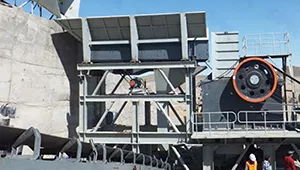


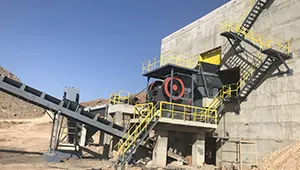



Single-cylinder cone crushers typically move the main shaft to set the discharge gap. Multi-cylinder designs usually use a separate gap adjuster. In a common multi-cylinder layout, cylinders around the frame provide holding force and overload relief.
Both designs can serve suitable secondary or finer rock-crushing duties. To choose between them, compare the actual crusher models, the feed material and the product you need to make.
Two Dingbo cone crusher examples
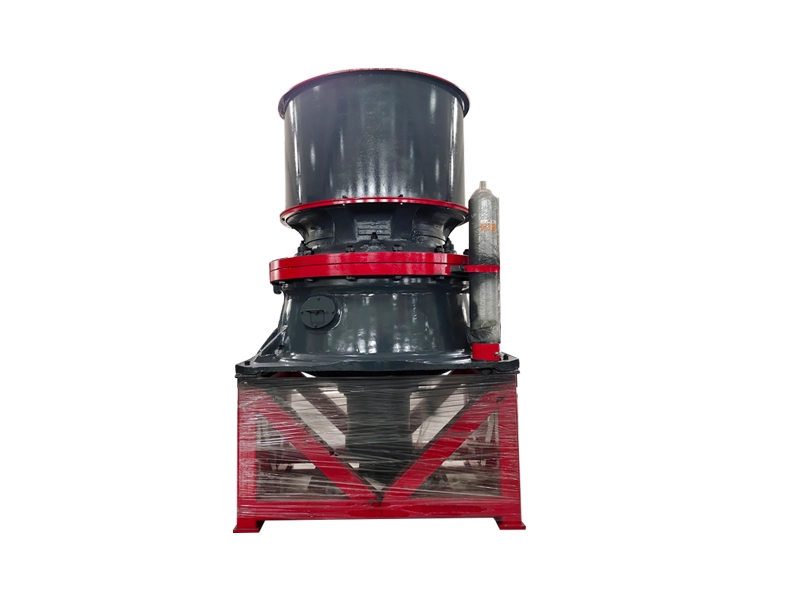
Dingbo catalogue image. View GP specifications.

Dingbo catalogue image. View HPD specifications.
These product images show the machine exteriors. The comparison below describes typical hydraulic arrangements; exact mechanisms vary by model.
Key differences at a glance
| What to compare | Single-cylinder | Multi-cylinder |
|---|---|---|
| Hydraulic layout | One main support cylinder acts on the main-shaft assembly. | Several cylinders form the holding or release arrangement around the frame. |
| Setting adjustment | Hydraulic movement changes the main-shaft and mantle position. | Common layouts adjust the bowl or concave position through a separate adjustment assembly. |
| Overload relief | The hydraulic support circuit provides relief movement when an uncrushable object enters. | Release cylinders allow the upper assembly to move under overload. |
| Maintenance focus | Support-cylinder seals, hydraulic pressure and access to the support assembly. | External cylinders, hoses, holding/release components and the adjustment assembly. |
Scroll sideways to view all comparison columns on smaller screens.
For maintenance planning, check liner-replacement access, lubrication requirements, inspection intervals and parts availability against the manufacturer's instructions. Cylinder count alone does not establish which machine will be easier or cheaper to maintain.
What affects capacity and product size?
Chamber geometry, feed grading, crusher speed, installed power and the discharge setting all affect the result. The closed-side setting (CSS) is the smallest discharge gap during the crushing cycle.
Compare each model's feed limit, chamber options and setting range, then request expected throughput for your material and target product. Product grading also depends on screening and recirculation. A cylinder count or a general percentage claim cannot replace that comparison.
How to choose for your crushing plant
- Define the feed. Record the rock or ore type, largest lump, feed grading, moisture and clay content.
- Specify the finished products. State the required size fractions and the screening arrangement.
- Compare models at the same duty. Review chamber selection, setting range, power and the operating assumptions behind the capacity data.
- Plan service access. Check liner changes, hydraulic-unit layout, lifting space and spare-parts support.
- Review the complete cost. Include feeding, screening, power supply, installation, wear parts and planned maintenance.
Using a cone crusher on a mobile plant
A mobile installation needs suitable feeding, discharge conveying, screening, power supply and service access around the crusher. Review transport dimensions and total mass as part of the complete station. See Dingbo's mobile crushing plant range for available plant categories.
For construction-waste applications, describe the actual proportions of concrete, brick, asphalt, metal and other contaminants. Plan feed preparation and separation before selecting the crushing process, and assess the prepared material against the chosen crusher's feed limits.
Discuss your application with Dingbo
Send your feed material, maximum feed size, desired product fractions, required throughput and site constraints. Dingbo can review suitable cone crusher options and the complete plant configuration. Contact Dingbo about your project.